The popularity of sterling silver jewellery worldwide continues to rise due to various factors including a wish among retailers and wholesale buyers to find luxury products at reasonable prices with excellent profit margins. Being aware of the entire cost breakdown of sterling silver is therefore necessary for jewellery companies so they can make informed purchasing decisions, price their products appropriately, and increase their profits.
This guide will detail for both retail and wholesale purchasers the full pricing breakdown that goes into the cost of producing sterling silver jewellery while allowing purchasers to understand what the true costs are when producing sterling silver.
In general, sterling silver jewellery prices will be determined by weight, purity, craftsmanship and complexity of production. The majority of manufacturers and wholesalers will use a cost-per-gram basis to figure their production costs and wholesale rates.
The spot price of 925 sterling silver can fluctuate frequently due to market changes in silver, supply and demand, and currency exchange rates. Because 925 Sterling Silver is made up of 92.5% silver content plus other alloy metals for strength, the current value of the silver directly affects the price of producing the jewellery.
Several factors influence the 925 sterling silver price, including:
Retailers who monitor silver price movements can plan inventory purchases more effectively and secure better wholesale margins.
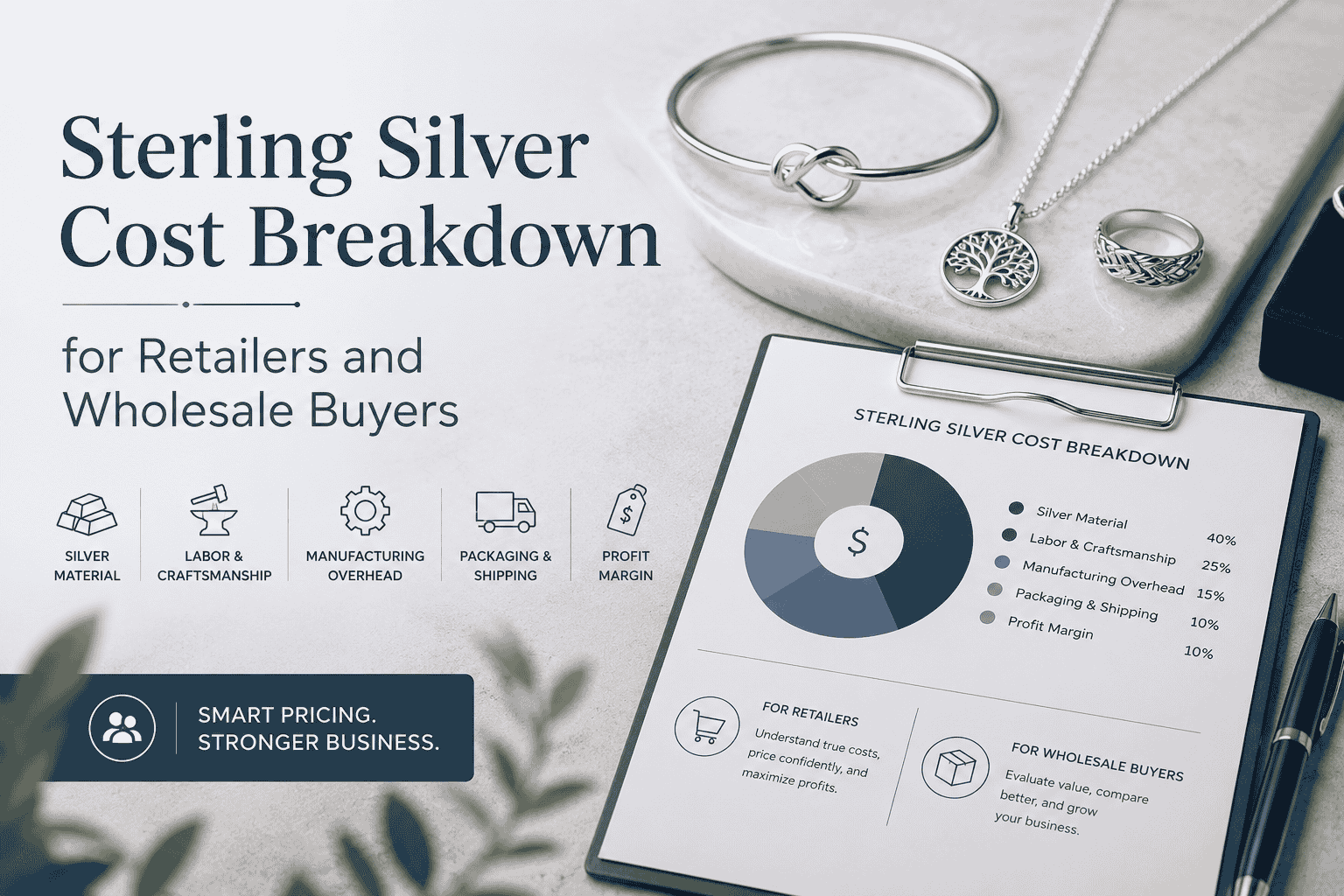
Raw silver pricing is significantly lower than finished jewelry pricing because finished products include additional manufacturing expenses such as:
For example, the raw silver value may account for only a portion of the final product cost, while the remaining expenses come from production, finishing, and business overheads.
A proper sterling silver jewelry pricing guide helps retailers evaluate supplier quotations and understand the factors behind wholesale pricing.
Most manufacturers calculate jewelry prices using the following structure:
Final Jewelry Cost = Silver Weight × Silver Rate + Labor Cost + Design Cost + Stone Cost + Finishing Charges + Profit Margin
The complexity of the jewelry design and craftsmanship significantly impacts the final wholesale price.
In any sterling silver jewelry pricing guide, average pricing per gram depends on factors such as:
Simple chains and plain rings usually cost less compared to gemstone jewelry or handcrafted designer collections because they require less labor and production time.
Retail buyers should compare:
before choosing a supplier.
A clear silver jewelry manufacturing cost breakdown helps businesses understand where production expenses occur and how to improve profitability.
Raw material cost is the largest component in jewelry manufacturing. This includes:
The daily fluctuation in the 925 sterling silver price directly affects production expenses and wholesale pricing.
Jewelry designing involves:
Custom jewelry collections generally require higher upfront investments, especially for retailers developing exclusive collections.
Labor charges depend on:
Highly skilled artisans increase product value but also contribute to the overall cost of sterling silver production.
Quality control is essential in jewelry manufacturing. Costs include:
Certified sterling silver jewelry builds customer trust and improves brand credibility in competitive retail markets.
For retailers and distributors, understanding the sterling silver cost breakdown becomes even more important when placing bulk orders.
Most manufacturers offer lower per-piece pricing for larger order quantities. Bulk production helps reduce:
Retailers placing higher-volume orders can often negotiate better wholesale pricing and exclusive designs.
Custom jewelry manufacturing includes additional expenses such as:
Retailers creating private-label collections should include these costs in their pricing calculations.
Importing sterling silver jewelry involves:
Understanding the complete silver jewelry manufacturing cost breakdown helps businesses accurately calculate landed costs before importing products internationally.
Retailers and wholesalers can improve profitability by optimizing sourcing and manufacturing strategies.
Working directly with manufacturers helps eliminate intermediary commissions and reduces procurement costs. Direct sourcing also provides:
Bulk ordering reduces:
Many suppliers offer discounted pricing tiers for larger volume purchases.
Simpler and optimized jewelry designs require:
Retailers can maintain attractive collections while improving profit margins.
Manufacturers who optimize production processes can minimize:
Efficient production techniques significantly reduce the overall manufacturing expense.
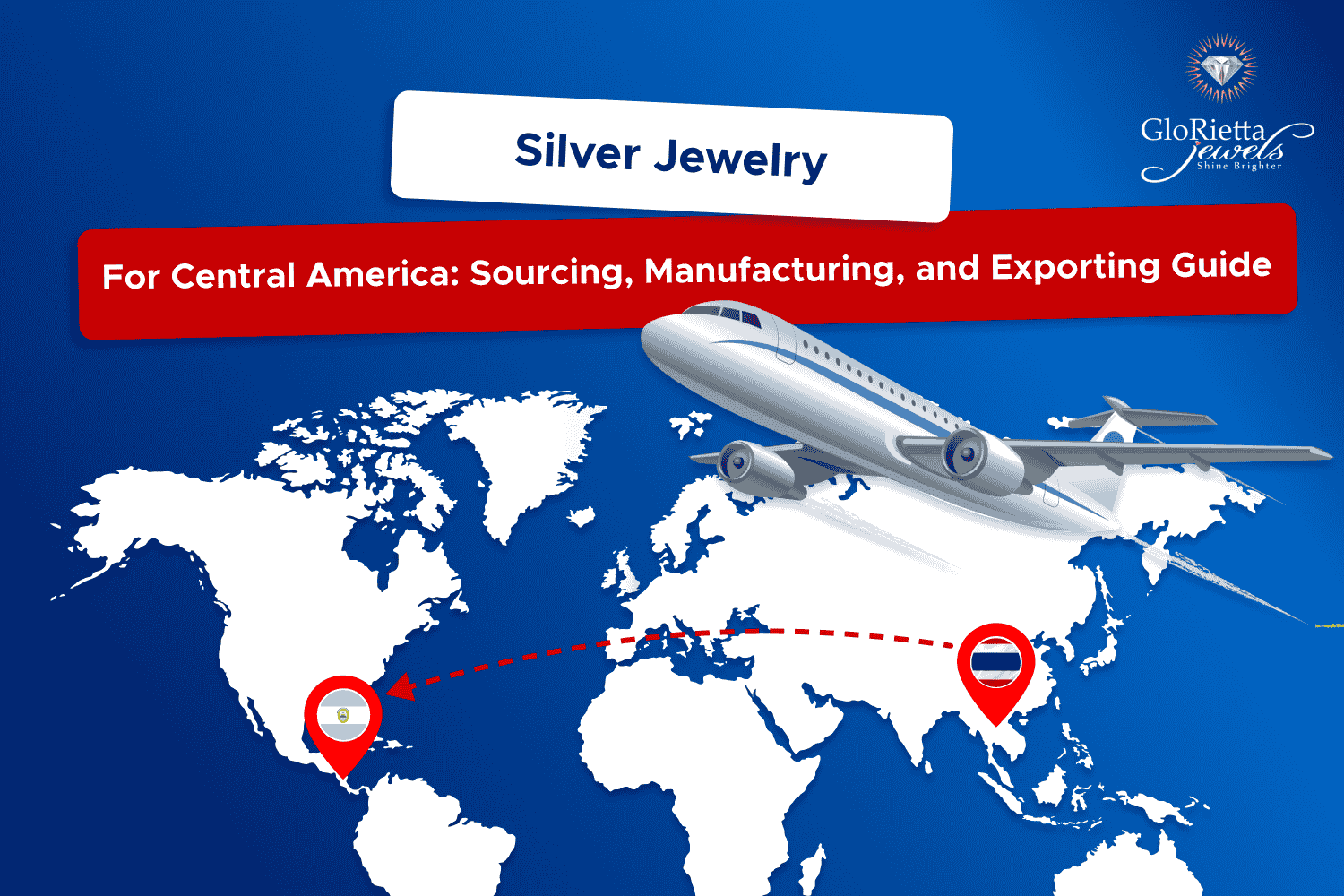
Thailand is globally recognized as a major center for sterling silver jewelry manufacturing because of its:
Many international retailers source wholesale sterling silver jewelry from Thailand due to the balance between affordability and premium finishing quality.
Thai manufacturers also specialize in:
This makes Thailand a preferred sourcing destination for jewelry retailers worldwide.
Understanding jewelry production expenses helps retailers and wholesale buyers make informed sourcing decisions and maximize profitability. From raw material pricing to labor, hallmarking, and import costs, every stage contributes to the final wholesale price. Businesses that source directly from reliable manufacturers, order strategically in bulk, and optimize product designs can significantly reduce expenses while maintaining quality standards.
For retailers looking to scale their business, partnering with Glorietta Jewels experienced sterling silver manufacturers in Thailand provides access to competitive pricing, skilled craftsmanship, and long-term growth opportunities.
Don’t Miss Out – Start Browsing Our Wholesale Silver Catalogue Now
VIEW CATALOGUEBuy Direct from the Manufacturer – 925 Sterling Silver at the Best Quality and Price
CONTACT US